
Intro Part 2
Now that we have a basic framework for attachment, let’s talk about what makes it operate: emotions. One of the primary functions of emotions is to alert us that we are no longer at peace with our environment. It is also the environment itself (our parents, grandparents, society, etc.) that shapes both our experience of our emotions and our attachment system. It is our environment that teaches us when our attachment system should activate, and what strategies the attachment system should employ.
Let’s imagine we’re back to being that little baby, crying out for our parents. We can now insert emotions into the attachment system. When you’re hungry, it feels bad. That’s an emotion. And it means I should cry and I’ll eat. The crying, followed by the eating is the attachment system at work. When you’re tired, that feels bad in a different way, and again you cry out, and your parents put you to sleep. Slowly but surely, we learn what actions lead to the desired outcome. More importantly, we learn to respond to the information our emotions are providing, we interpret those emotions, and the attachment system goes to work.
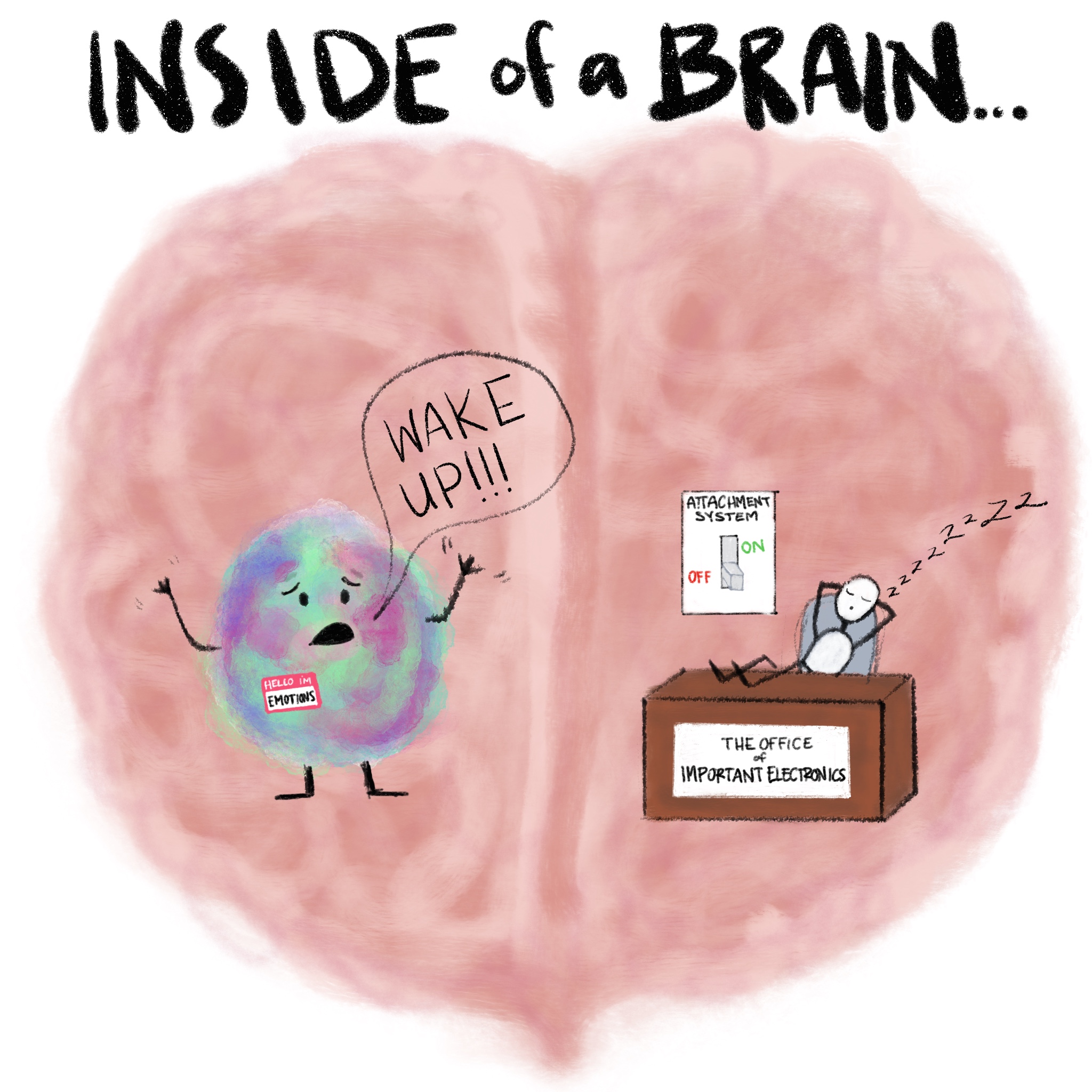
Emotions as we grow up
Now, as we grow up, things become more complicated. My needs and emotions get more complex, as well as what it takes to meet those needs. Also, I have to start learning patience. As an infant, we typically get an instant response, which feels amazing. But as we grow, we have to learn to tolerate some level of distress, trusting that our needs will be met in a timely manner. If my parents fostered a mostly secure attachment, then I will be better at tolerating the distress that comes with unmet needs. If they fostered an insecure attachment, then I’ll struggle to tolerate the distress and move in one of two directions. Either I’ll ramp it up with a lot of highly distressed need-seeking behaviors. Or I’ll ramp it down, suppressing the needs and emotions. In both versions, it is a form of managing the underlying, distressing emotion.
This is also about the time we start to develop stories. Stories about ourselves, about these sorts of situations, about the emotions themselves. We develop stories about who my parents are, what attachment figures are like, and eventually, what my partner is like. We can think of these stories as short cuts. In a secure system, for example, I tell myself others want to be there for me. I can tolerate the distress of them not being there while I wait for them to be there. I can manage the emotions, maybe not perfectly, but well enough. In an insecure system, I tell myself others can’t or don’t want to be there for me. Tolerating the emotions becomes much more difficult. And I’m more likely to turn to unhelpful, even counter productive behaviors to manage those negative feelings.
Emotions aren’t just individual, they’re social
I’d like to remind you that I suggested emotions are not exclusively individual, but also social. Early attachment relationships show us why, and how, that is. Becoming hungry is an individual experience, but as a baby, eating is social. A baby cannot do it for themselves. Nor can they change themselves. Nor, as they grow into toddlers, can they regulate their own emotions. It is not possible. Emotions exist within us and operate individually to let our body know we are no longer at peace with our environment. But that’s where the individual process ends. It requires some sort of social interaction to find security and feel at peace and rest again. So we see that, even if an emotion begins in an individual way, it can only be regulated socially.
So as an adult, when your partner does something you don’t like, it’s the same basic emotion driving your reaction as when you were a baby, crying out for help. But now, you can assign meaning in a way you couldn’t back then. And, at an unconscious level, you can connect what is happening here and now with your partner to what happened there and then with your parents. So when you partner does that thing you don’t like, you don’t only feel a negative emotion. You create a story. Or more accurately, it fits into a story you probably already have.
Making meaning
That story might sound something like this: They did this hurtful thing because they don’t care about you. Or perhaps they care more about themselves than they care about you. Then again, this is what you’ve come to expect. You are a lot to handle. Everyone in your life has told you as much. But that means you’ll be alone forever. No one deserves that. Plus, you actually love this person. But it seems they’re realizing you’re not worth the work to love back. Well you certainly can’t talk to them about it. They’ve just demonstrated they don’t even like you, and also, they don’t seem to care about how you feel anyway. New plan: point out how they are the problem. Their behavior is the problem. Their inability to meet your needs. Their seeming disinterest in meeting your needs. Their apparent willingness to accept all you do for them but never return that love.
One way to make conflict stop
Conflict. If you can just get them to see how they’re hurting you, you can get them to stop, and you’ll feel safe and secure again. Of course, the problem is, they don’t agree that they’re a cold, heartless, need-vacuuming machine. They think they’re a basically decent person. The nerve. Would a basically decent person get defensive when confronted with their obvious callousness? No, no they wouldn’t. You were right. They don’t care about you. You’re not safe. This relationship isn’t secure. More conflict.
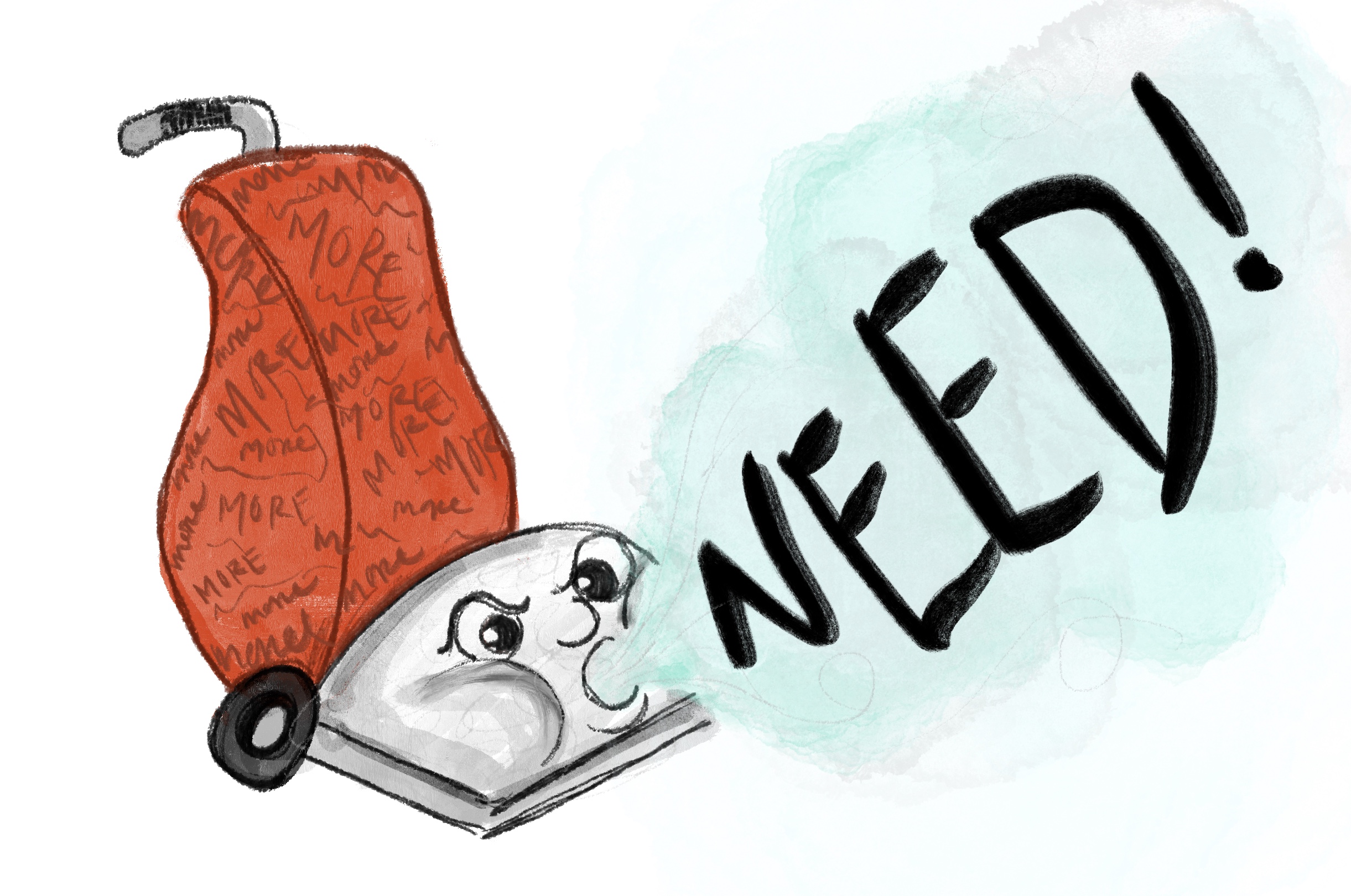
In relationships, taking actions to make the negative feeling go away often overlaps with telling my partner what they’re doing wrong. It usually does not correspond to my talking about how I feel scared. Or sad. Or like I’m a failure. Or that I just don’t matter. Or any of the hundred other stories I have about myself, my emotions, and my partner. And making it even more complicated, while I go through this process, so does my partner. Every action I take to regain security creates a sense of insecurity in my partner. They react in their own way, and we spiral out of control.
I just want to stop feeling this way
We’ll end here for now. Here’s a short cut way to think about conflict in relationships. Why do you have it? Because you want to stop feeling this negative emotion. But guess what? Every relationship, even the most healthy ones, will make you feel unpleasant, even scary emotions from time to time. We need to shift the goal away from getting rid of these negative feelings. We need to refocus on welcoming these negative emotions. Making space for them so we can manage them together. This is known as Co-Regulation. Conflict is the two of you trying to do that. Discord is ending up in blame and continuing the negative cycle of negative emotions. This is what Couples Communication: A Practical Guide is all about. I’m going to lay out some tools (sometimes with illustrations!), for how to move from conflict to co-regulation.
